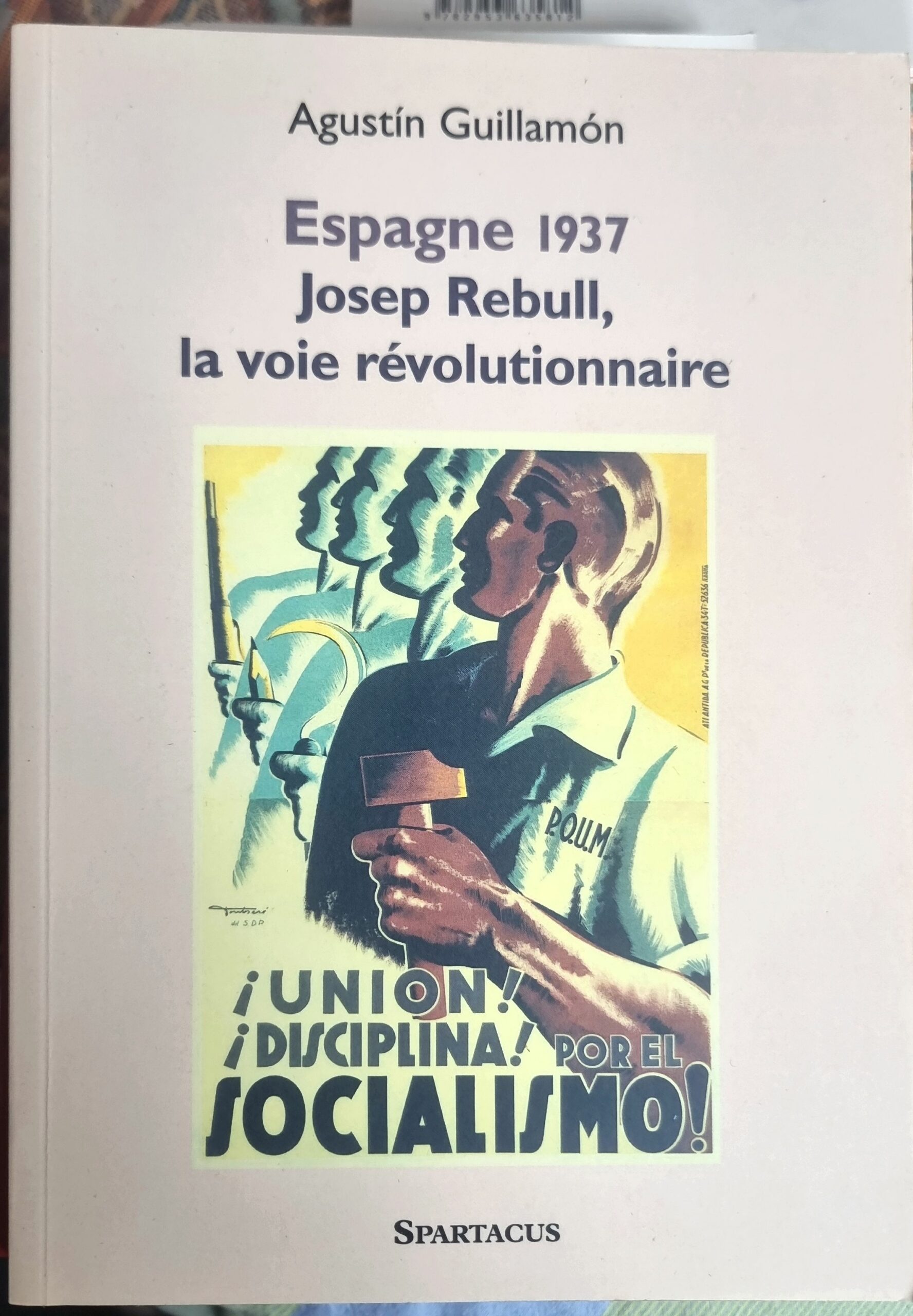

Espagne 1937 Josep Rebull, la voie révolutionnaire
Fiche technique
Résumé
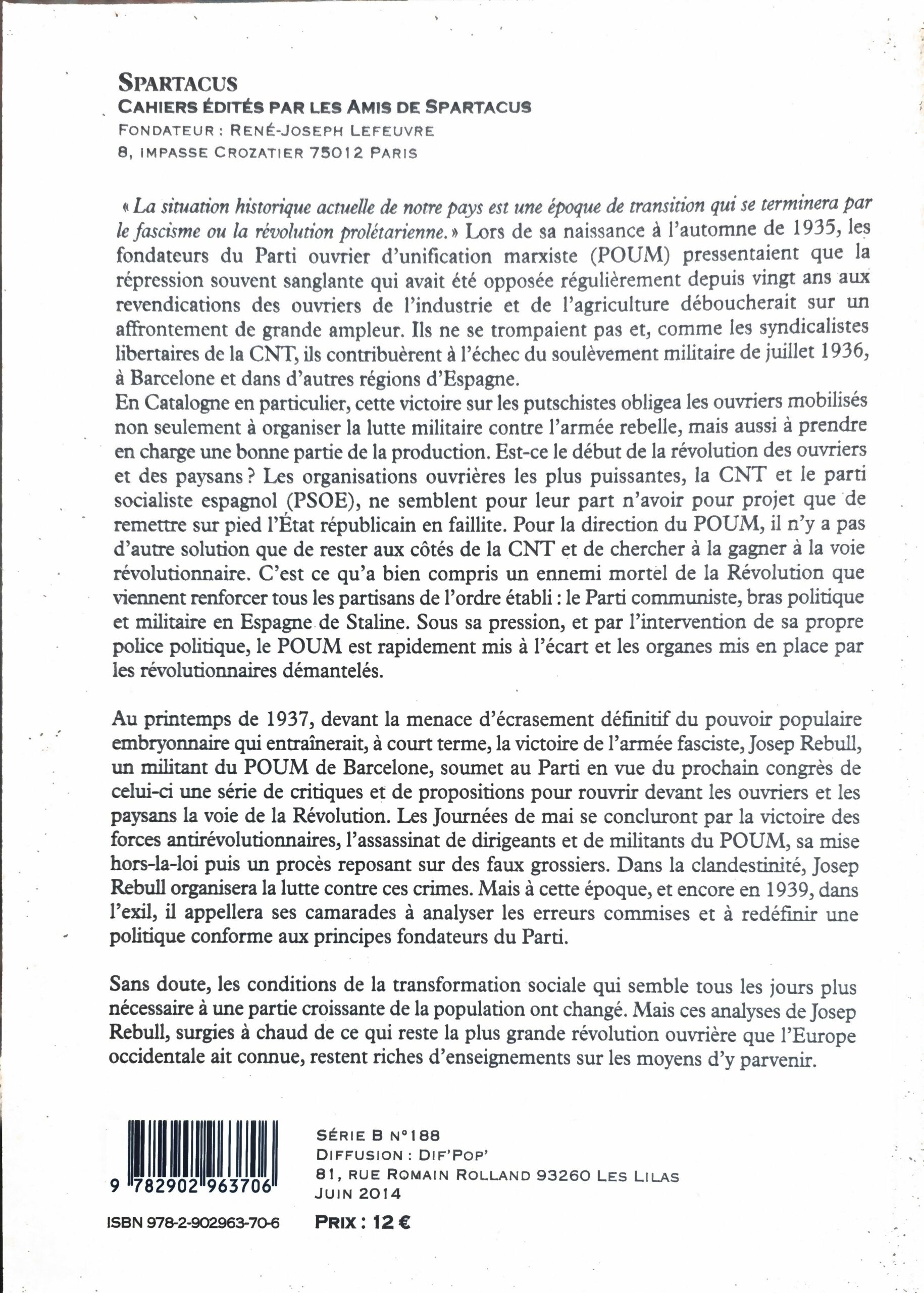
Our nation's present historical juncture represents a transitional era, destined to culminate either in fascism or a workers' revolution. In the autumn of 1935, at its inception, the founders of the Workers' Party of Marxist Unification (POUM) foresaw that the often violent suppression faced by industrial and agricultural workers' demands over two decades would lead to a massive confrontation. Their foresight proved accurate, and alongside the libertarian trade unionists of the CNT, they were instrumental in the defeat of the military uprising of July 1936 in Barcelona and other Spanish regions. Especially in Catalonia, this victory over the putschists compelled mobilized workers not only to wage military combat against the rebel army but also to oversee a significant portion of production. Was this the dawn of a workers' and peasants' revolution? The dominant labor organizations, the CNT and the Spanish Socialist Party (PSOE), appeared to have no agenda beyond reconstituting the failing republican state. For the POUM leadership, the only viable path was to align with the CNT and strive to bring it towards a revolutionary course. This was clearly understood by a mortal adversary of the Revolution, reinforced by all adherents of the established order: the Communist Party, Stalin's political and military arm in Spain. Under its influence and through the intervention of its own political police, the POUM was swiftly marginalized, and the revolutionary bodies it had established were dismantled. By spring 1937, confronted by the imminent crushing of the nascent popular power, which would soon lead to the fascist army's triumph, Josep Rebull, a POUM activist from Barcelona, submitted a series of criticisms and proposals to the Party for its upcoming congress, aimed at reopening the path of revolution for workers and peasants. The May Days ended with the triumph of counter-revolutionary forces, the assassination of POUM leaders and activists, the party's outlawing, and a trial based on blatant fabrications. Operating clandestinely, Josep Rebull organized resistance against these injustices. However, even then, and later in 1939 while in exile, he urged his comrades to analyze past mistakes and redefine a policy consistent with the Party's foundational principles. Undoubtedly, the conditions for social transformation, which appears increasingly vital to a growing segment of the population, have evolved. Nevertheless, Josep Rebull's immediate analyses, born from what remains Western Europe's most significant workers' revolution, continue to offer invaluable lessons on how to achieve this transformation.